
Salt Water Pools in Wake County: What Discerning Homeowners Need to Know
By Proactive Pool Solutions | Serving Wake County, NC
If you've invested in a luxury home in Wake County — whether in North Raleigh, Cary, Apex, or Holly Springs — your pool is more than an amenity. It's a centerpiece. And increasingly, the homeowners we work with are asking the same question: Is it time to convert to a salt water pool?
The answer, for most high-end homeowners, is a resounding yes. But the reasoning goes deeper than the popular talking points. Here's what you actually need to understand before making the decision.
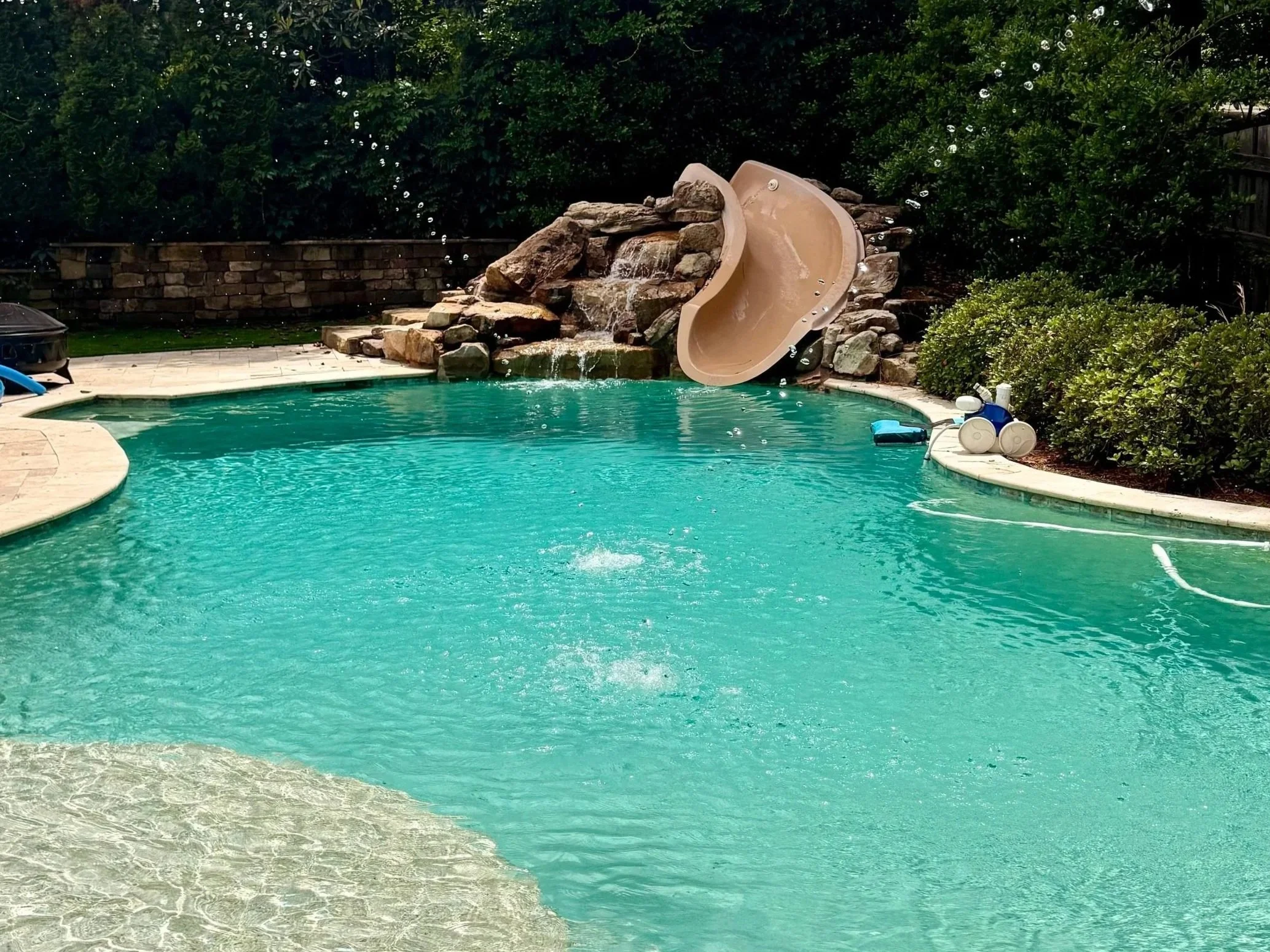
What Is a Salt Water Pool, Really?
There's a common misconception worth clearing up immediately: a salt water pool is not chlorine-free. It simply generates its own chlorine through a process called electrolysis, using a salt chlorine generator (SCG) installed in your circulation system.
Dissolved salt — at roughly one-tenth the salinity of ocean water — passes through a electrolytic cell. A low-voltage electrical charge splits the sodium chloride into hypochlorous acid, which sanitizes the water. The byproduct then converts back to salt and the cycle continues.
The result is a self-replenishing sanitation system that produces softer, more consistent chlorine levels than traditional manual dosing — without the harsh byproducts like chloramines that cause the stinging eyes and strong chemical odor most people associate with pools.
Why Wake County's Climate Makes Salt Water Systems Especially Smart
Wake County's climate presents specific conditions that make salt water systems a particularly intelligent choice for this region.
Long swim seasons demand consistent chemistry. With warm weather stretching from April through October, Wake County pools are in active use for the better part of the year. Traditional chlorine systems require vigilant, frequent manual adjustments to maintain safe sanitizer levels across temperature swings. A salt system automates that process, maintaining a more stable chemical balance day-to-day.
UV intensity during summer months. Chlorine dissipates rapidly under direct UV exposure. Salt systems can be paired with a cyanuric acid stabilizer and UV-protected plumbing to significantly reduce chemical loss — keeping your pool safer and your operating costs lower through the peak season.
The Tangible Benefits for Luxury Pool Owners
1. Water Quality That Feels Different
The water in a well-maintained salt water pool has a noticeably different quality — often described as silkier and gentler on skin and eyes. For homeowners entertaining guests or using their pool regularly, this is not a minor detail. It's the difference between a pool that guests enthusiastically return to and one they politely tolerate.
Chloramines — the compounds responsible for red eyes and that sharp chemical smell — are dramatically reduced in salt systems because fresh chlorine is continually being generated, rather than accumulated over time in various degraded states.
2. Lower Long-Term Chemical Costs
The initial investment in a quality salt chlorine generator typically ranges from $1,500 to $3,500 installed, depending on pool size and system quality. Over a three-to-five year horizon, most homeowners see meaningful savings on traditional chemical purchases. The math, for a large luxury pool, consistently favors conversion.
3. Reduced Wear on Premium Finishes
High chlorine spikes — a common occurrence with manual dosing — can bleach and deteriorate premium plaster finishes, fade tile grout, and degrade expensive pool accessories. Salt systems, by producing chlorine at lower, more consistent levels, are gentler on the investment you've made in your pool's aesthetics.
4. Less Hands-On Maintenance Between Professional Visits
Salt systems don't eliminate the need for professional maintenance — no responsible pool company would suggest they do. But they do reduce the chemical volatility between service visits. Your pool is less likely to swing into dangerous or pool-damaging chemical states between appointments.
What Salt Water Pools Require That Traditional Pools Don't
Luxury homeowners appreciate knowing the full picture, so here is the honest counterbalance.
Salt is corrosive. Sodium chloride, at the concentrations used in pool systems, can accelerate corrosion on certain metals and materials. Heaters, ladders, lighting fixtures, and deck hardware need to be verified as salt-compatible — or replaced with salt-rated components — prior to conversion. This is a non-negotiable step that should never be skipped.
The electrolytic cell requires maintenance. The generator cell — the component that does the actual chlorine production — needs to be inspected and cleaned periodically, typically every three to four months. Calcium buildup on the cell reduces efficiency and, if left unaddressed, shortens the cell's lifespan considerably.
You still need to monitor and balance chemistry. pH, alkalinity, calcium hardness, cyanuric acid, and stabilizer levels all require ongoing management. Salt systems actually tend to push pH upward over time, meaning more frequent pH adjustments are common. A professional service schedule remains essential.
Salt cells have a finite lifespan. Most quality cells last three to seven years, depending on usage and maintenance. Replacement costs typically run $500 to $1,000. This should factor into your long-term cost analysis.
Converting Your Existing Pool to Salt Water in Wake County
Conversion from a traditional chlorine pool to a salt system is well within reach for most existing pools in Wake County. The process generally involves:
System assessment — evaluating your existing equipment for salt compatibility, identifying any components requiring upgrade or replacement
Cell and controller installation — selecting the right-sized generator for your pool's volume and installing the controller and bypass plumbing
Initial salt loading — adding the appropriate amount of pool-grade salt (approximately 50 lbs per 2,000 gallons to reach target levels)
Chemistry establishment — balancing all parameters before activating the system
System calibration — setting the cell's output percentage based on bather load and pool conditions
A well-executed conversion typically takes one service day, with chemistry stabilizing over the following week.
Choosing the Right Salt Chlorine Generator for a Luxury Pool
Not all salt systems are equal. For a high-end pool, we recommend investing in a generator rated for at least 150% of your pool's actual volume — this provides headroom during peak usage periods without running the cell at maximum output continuously, which extends cell life.
Look for systems with:
Digital salt-level monitoring (eliminates guesswork)
Automatic flow detection (shuts down cell if circulation stops, preventing damage)
Reputable cell warranties of three years or more
Brands like Jandy, Pentair, and Hayward are widely respected and well-supported in the Wake County market.
Frequently Asked Questions from Wake County Homeowners
Can I convert a pool with a fiberglass finish to salt water? Yes. Fiberglass is actually one of the most compatible surfaces for salt water systems, as it is inherently non-corrosive.
Will salt water damage my travertine or natural stone decking? With proper drainage and maintenance, natural stone around a salt water pool remains in excellent condition. The concern arises primarily from splash zones with poor drainage, where salt can concentrate and cause surface deterioration over time. Proper sealing and drainage design are the solutions.
How does salt water affect screen enclosures? Aluminum screen enclosures can corrode with prolonged salt exposure. Marine-grade aluminum or powder-coated enclosures designed for salt environments are the appropriate specification for a covered salt pool.
Does a salt pool still need to be shocked? Yes — periodically. Salt systems generate routine chlorine effectively, but after heavy bather loads, storms, or algae events, a manual shock treatment restores the pool quickly. Most salt system controllers have a "super chlorinate" mode that runs the cell at maximum output for a period of time, which handles routine shocking without adding separate chemicals.
The Bottom Line for Wake County Homeowners
A salt water pool, professionally installed and consistently maintained, represents the most refined swimming experience available for residential pools today. The water quality is superior, the chemical demands are more forgiving, and the long-term economics are favorable — particularly for the large-format pools common in Wake County's luxury neighborhoods.
The key is professional execution. A salt system that is improperly specified, carelessly converted, or inadequately maintained will underperform and create problems. Done right, it becomes a nearly invisible system that simply keeps your pool pristine.
Ready to Explore a Salt Water Conversion for Your Wake County Pool?
Proactive Pool Solutions specializes in premium pool service and maintenance for discerning homeowners throughout Wake County — including Raleigh, Cary, Apex, Holly Springs, Fuquay-Varina, Wake Forest, and surrounding communities.
Whether you're considering converting your existing pool to salt water or want a professional assessment of your current system, our team brings the expertise and attention to detail your investment deserves.
Visit us at proactivepoolsolutions.com to schedule a consultation.
Proactive Pool Solutions — Premium Pool Care for Wake County's Finest Homes.